



LIGHT
SHAPES
OUTDOOR.
Outdoor lighting does not end with the luminaire. It guides, highlights architecture, improves safety and creates the atmosphere of a place. The Bee-Light Outdoor collection combines distinctive form, precise optics and construction designed for demanding environments.
Light that becomes part of the architecture
We design the Outdoor collection for spaces that remain active after dark. The appearance of the luminaire matters, but the lighting effect matters even more: clear routes, comfortable surroundings, deliberately highlighted façades and light delivered exactly where it is needed.
The catalogue includes luminaire families for projects of different scales — from discreet bollards and wall-mounted solutions to urban lighting, projectors and high-output linear systems. Explore projects, compare variants and move on to technical data when a design concept becomes a specific lighting solution.
Architecture takes on a new rhythm after dark
Selected projects show how light guides users, emphasises material textures and shapes the character of outdoor spaces.

Wola Rasztowska
HOYA L · ORCHID OD N · PUMPKIN PRO G2 OD
Juu Residential Estate
PRIMROSE
MAN Wolica
IRIS
Ogrody Wenus
HOYA L · NEMESIA IN
Osada Wygoda Residential Estate
NEMESIA · LILY OD O N
Socho Residences
HOYA L
Olchowy Park Residential Estate
IRIS · HOYA MINI
Marynin Residential Estate
HOYA L · MALLOW MINI · NEMESIA INFind luminaires suited to the space
Each group addresses a different design task. Select a category to focus on one typology or browse the full Outdoor collection.
Full Outdoor collection
From guidance lighting along paths to powerful solutions for large areas. Browse the full range and see how different families can work together within one project.
CALLUNA
47 configurations + CALLUNA ASYThe CALLUNA bollard family includes round and square versions for paths, greenery and building surroundings, complemented by CALLUNA ASY with directional asymmetric light.
HOYA MINI
21 configurationsCompact bollards for paths, greenery and residential surroundings. The family combines a restrained form with controlled light close to the user.

DILL BOLLARD
2 × projektor DILLAn architectural bollard with two adjustable DILL projectors. Each projector can be aimed independently to guide users, illuminate the surroundings or accent selected elements of the space.
CORTADERIA
51 configurationsA slim outdoor bollard designed for pedestrian routes, greenery and building surroundings, with a discreet architectural form.
JUNIPER
6 configurationsOutdoor bollard for paths, pedestrian areas and greenery, designed to provide functional guidance lighting close to the ground.
LIZZY
4 configurationsCompact bollard for pedestrian routes and building surroundings, combining a simple form with controlled outdoor light.
MAPLE
1 configurationsOutdoor bollard for paths and landscaped areas, designed to organise the space with comfortable guidance lighting.


HOYA
194 konfiguracjeA full-size pole system for urban spaces, residential developments and circulation routes, including multiple arm and head configurations.
HOYA L + DILL
16 configurationsA dual-function solution combining the HOYA L pole with a directional DILL projector. One structure can provide general area lighting while precisely accenting a selected zone, façade or architectural detail.
IRIS
30 configurationsUrban lighting poles designed for roads, parking areas, pedestrian routes and larger outdoor spaces.

PANSY
4 configurationsOutdoor poles for urban and residential spaces, combining functional area lighting with a restrained architectural form.


DILL
13 configurationsCompact S and L projectors with high mechanical resistance and a range of optical distributions.
FEVERFEW
3 configurationsProjectors for landscape and architectural applications, greenery, trees and detailed accent lighting.
PUMPKIN
7 configurationsHigh-power projectors for large outdoor areas, sports grounds, façades and spaces requiring high luminous flux.
IVY M G2
100 configurationsHigh-output linear projector family for large outdoor spaces and applications requiring powerful, controlled light.
PHLOX
30 configurationsHigh-power PRO projectors for large areas and applications requiring high luminous flux.
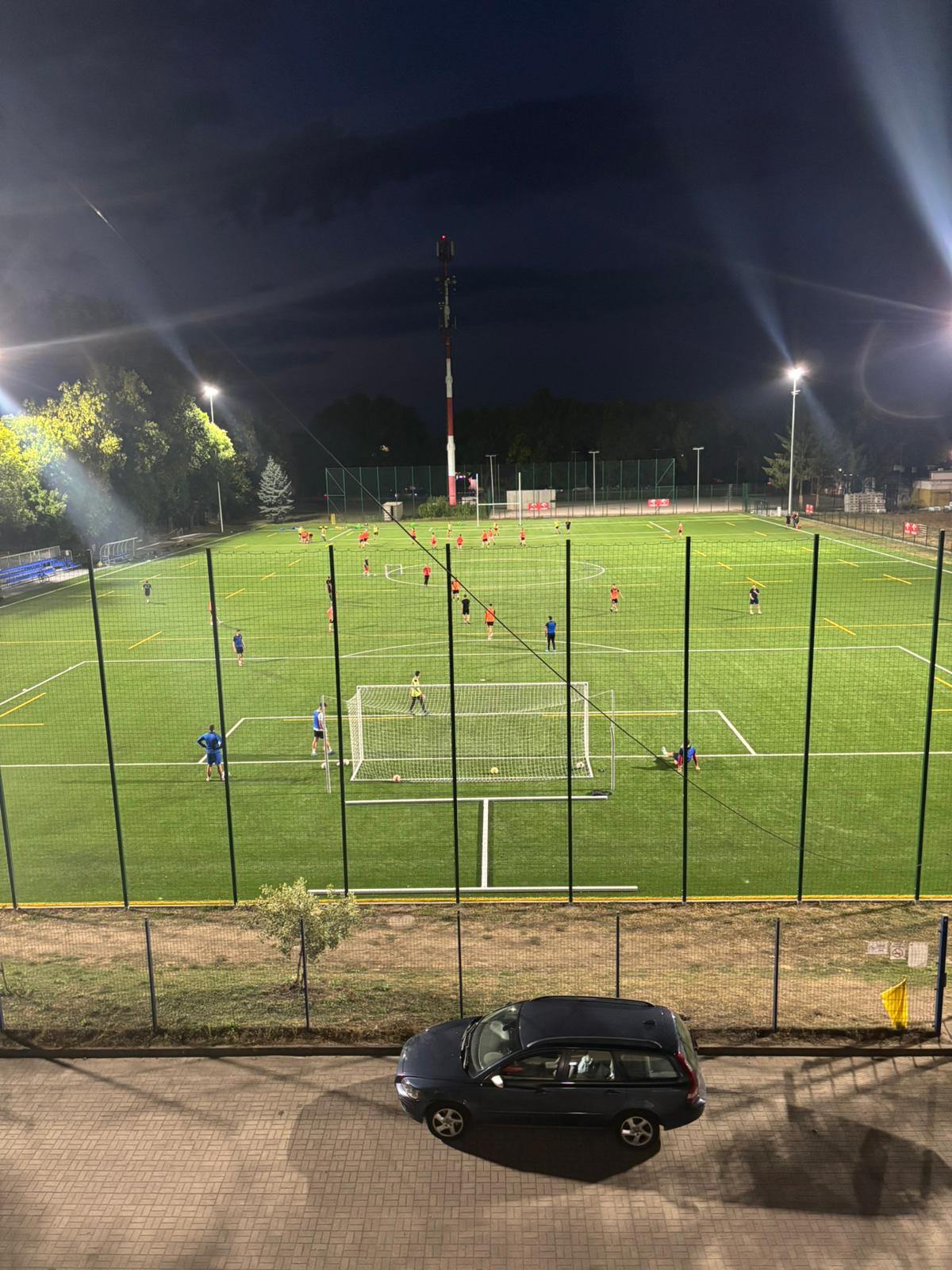


NEMESIA N / K
21 configurationsWall and surface-mounted NEMESIA N / K luminaires for entrances, façades and circulation zones.
NEMESIA OD
37 configurationsAn architectural wall luminaire with a clearly different character from NEMESIA N / K. It creates precise façade effects through single- and multi-directional variants and a range of optical distributions.
CARNATION
12 configurationsOutdoor wall luminaire for façades, entrances and circulation zones.
COLLARD
1 configurationsWall-mounted outdoor luminaire for entrances, façades and circulation areas.
GAZANIA
1 configurationsArchitectural wall luminaire designed to create controlled light on façades and building surroundings.
HOLLOWROOT
1 configurationsOutdoor wall luminaire for façades and entrance zones, designed for functional and architectural lighting.
MALLOW
25 configurationsA family of compact wall-mounted outdoor luminaires for façades, entrances and circulation routes.
PRIMROSE
31 configurationsOutdoor wall luminaire for façades and entrances, combining a clean form with controlled architectural light.
RUBUS OD
1 configurationsOutdoor wall luminaire for façades, circulation zones and entrances.
SENECIO GRID K
8 configurationsOutdoor wall luminaire with a defined light distribution for façades and circulation areas.
DANDELION
1 configurationsCompact outdoor wall luminaire for entrances, façades and circulation zones.
NEMESIA IN
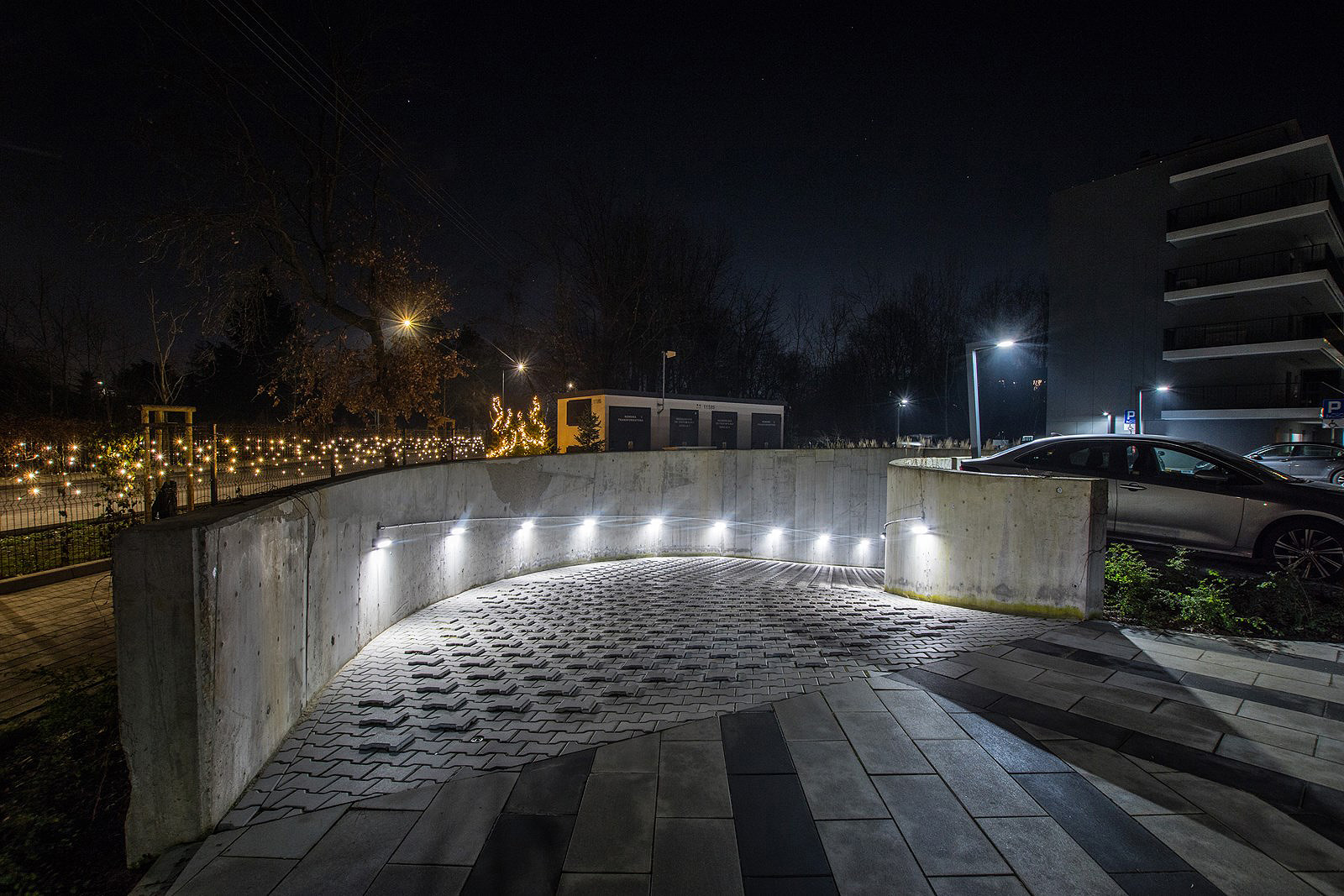
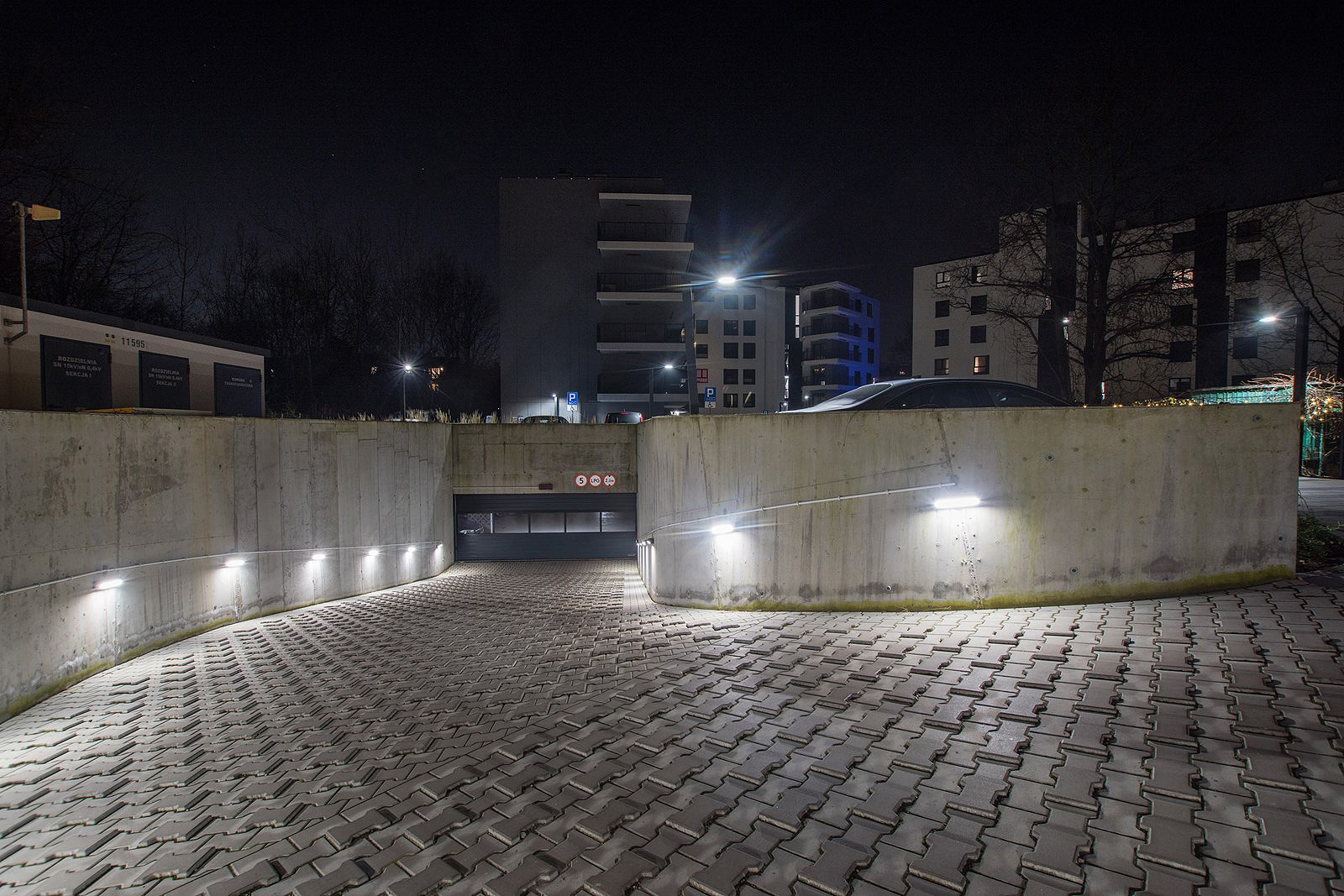
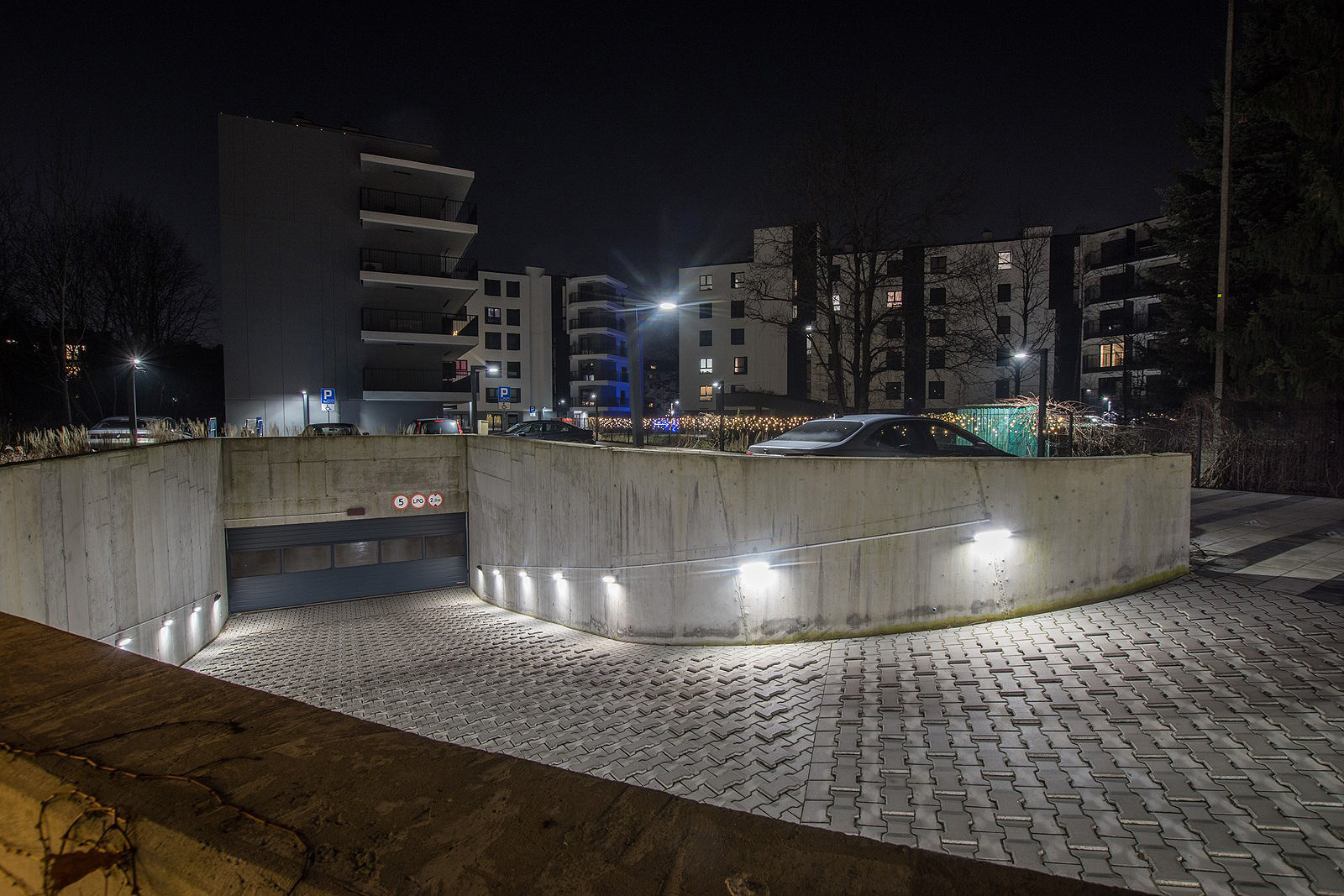
36 configurationsWall-recessed luminaires for garage entrances, ramps, driveways and circulation areas. The recessed installation keeps the light low and precise without visually dominating the architecture.
HEATHER
2 configurationsWall-recessed luminaire for garage entrances, ramps, driveways and circulation areas, keeping the light low and controlled.
LILY OD O K
Outdoor variantOutdoor wall luminaire for façades, entrances and circulation routes. It keeps the light close to the architecture and helps define clear zones around the building.


COSMOS
2 configurationsIn-ground luminaire for architectural accents, greenery and exterior details.
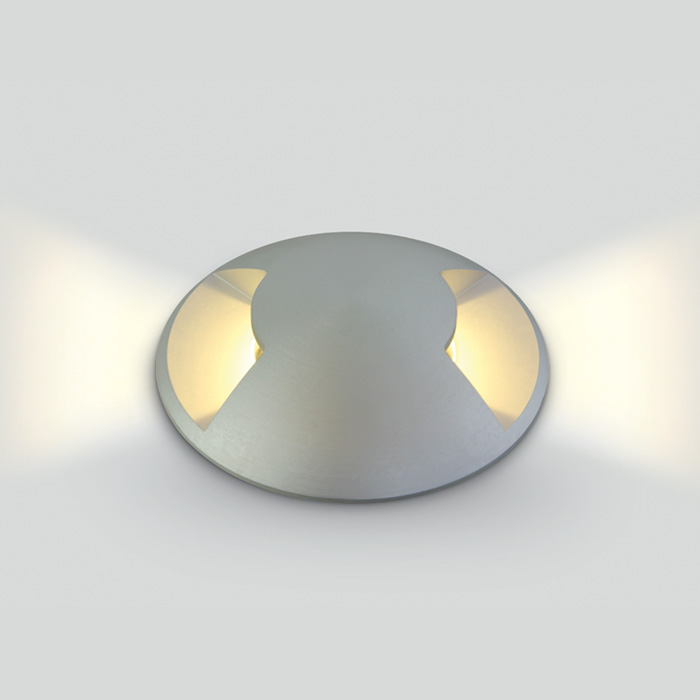
GODETIA
3 VARIANTSIn-ground IP67 luminaire available in three light-distribution variants for façades, paths and architectural details.
MOSS
3 configurationsIn-ground luminaires for architectural accents, greenery and outdoor details.
SAWARA
1 configurationsIn-ground outdoor luminaire for accent lighting and architectural details.


AUBRETIA
12 configurationsSurface-mounted ceiling luminaires for canopies, entrances and covered outdoor circulation areas.
ORCHID OD N
24 configurationsLinear outdoor surface-mounted luminaire for canopies, covered areas, entrances and circulation routes.
LILY OD O N
Outdoor variantOutdoor surface-mounted ceiling luminaire for canopies, covered areas, entrances and circulation zones. Its discreet form integrates naturally with the architecture.
Good lighting starts with the right decisions
A good outdoor luminaire has to do more than simply emit light. It should work exactly where it is needed, integrate well with the architecture and maintain its performance for years.
That is why the key selection criteria are practical: sealing, resistance, optics, efficiency, colour temperature and build quality. Below we explain them simply, without unnecessary theory.
IP — ready for outdoor conditions
IP indicates how well a luminaire is protected against dust and water. The more exposed the installation location, the more important the correct protection rating becomes.
IK — resistance that matters
IK defines a luminaire’s resistance to impact. In public spaces, pedestrian routes and car parks, high mechanical resistance simply extends the service life of the installation.
More light with less power
Watts indicate energy consumption, lumens the amount of light and lm/W the efficacy of the luminaire. A good luminaire delivers the required effect without unnecessary power.
Optics — light exactly where it is needed
Optics determine where the light goes. A narrow beam highlights details, a wide beam illuminates space evenly, and an asymmetric distribution directs light along a road, path or façade.
3000 K, 4000 K or 5000 K?
3000 K creates a warmer, more atmospheric effect and works well with greenery and residential architecture. 4000 K provides a neutral appearance and very good visual clarity. 5000 K offers higher contrast and can deliver very high luminous efficacy, making it suitable where visibility and energy efficiency are priorities. Colour temperature should always be selected for the function and character of the space.
Quality that shows over time
Outdoor luminaires operate throughout the year, so the housing material is only one part of the equation. Seals, finish, construction and serviceability are equally important and determine how the luminaire ages in real conditions.
Light responsibly
Good lighting does not brighten everything around it. It directs light onto paths, façades, squares or greenery, reduces glare and limits light reaching areas that do not actually need illumination.
Not more. Better
More power does not mean a better design. The best result comes from the right distribution, mounting height, spacing and controls — exactly as much light as the space needs.
Lighting starts with the needs of the space
Good lighting starts with the place, not the luminaire. First we define how the space should look after dark, where light should guide people, what it should highlight and what level of comfort it should provide. Only then do we select the luminaire form, optics and performance. This is the approach behind the Bee-Light Outdoor collection.
Wide or asymmetric distribution, reduced glare and clear visual guidance.
Uniformity, comfort, high mechanical resistance, and mounting height and optics matched to the scale of the space.
Precise light distribution, control of spill light and the ability to emphasise texture and architectural rhythm.
Efficiency, uniformity, resistance, reduced glare and limited light spill beyond the site.
Careful light levels, appropriate colour temperature, controlled direction and avoidance of unnecessary upward light.
A smooth transition between interior and exterior, clear entrances and high visual comfort.
High efficiency, suitable optics, power reduction and adaptation to the geometry of the task.
Be responsible. Do not pollute the night with light
Good outdoor lighting is not about using as much light as possible. It should reach exactly where it is needed — a road, path, entrance, façade or square — without lighting the sky, windows or areas outside the project boundary.
Reducing unnecessary light means lower energy use, less glare, greater comfort for residents and a lower impact on the night environment. The key factors are suitable optics, correct mounting height, appropriate power, shielding of the light source and controls that reduce light levels when full output is not required.
Do not light the sky
A luminaire should direct light onto the surface that genuinely needs illumination. Limiting light above the horizon reduces sky glow, lowers the impact on the night environment and follows an increasingly important design principle: less light pollution and greater control of light emission.
Use only as much light as needed
More power does not mean a better design. The correct light distribution and luminaire placement can achieve the required effect with less power and without excessive luminous flux.
Control the direction of light
Precise and asymmetric optics help direct light along roads, paths and façades without spilling it onto neighbouring areas.
Adapt light levels throughout the night
Schedules, sensors and dimming reduce output when traffic is lower while maintaining safety where it is needed.
Design for comfort, not only illuminance
A shielded light source, suitable mounting height and correct aiming angle reduce glare and improve visibility without increasing power.
Match colour temperature to the surroundings
In residential areas, parks and environmentally sensitive locations, warmer colour temperatures and lower light levels should be considered whenever project requirements allow.
Control light by time and motion
Full output is not required throughout the entire night. In car parks, loading areas and internal roads, schedules, presence sensors and dimming can reduce lighting levels during low traffic and automatically increase them when a person or vehicle appears.
Frequently asked questions before choosing a luminaire
Five questions that most often arise when technical parameters need to be translated into a real design decision.
01How do I select a luminaire without over-lighting the space?+
Start with the function of the space, mounting height and required lighting levels, then select power and luminous flux. In practice, correct optics, luminaire spacing and control of spill light are more important than the lumen figure alone.
02Can one luminaire family cover an entire project?+
Sometimes, but the best result usually comes from combining several luminaire types: bollards for pedestrian guidance, wall luminaires at entrances, projectors for accent lighting and pole-mounted luminaires for larger spaces. Consistency of form, colour temperature and light distribution is key.
03How can glare and light spill into windows be reduced?+
Control the direction of emission by using suitable optics, correct mounting height and aiming angle, and avoiding excessive power. In many applications asymmetric distributions make it possible to illuminate a road, path or façade precisely without lighting areas outside the project boundary.
04Is it worth reducing light levels at night?+
Yes, if the function and safety requirements allow it. During low-traffic hours, reducing output can lower energy use, glare and the impact on the night environment. The best results come from combining schedules, controls and properly designed optics.
05What should be checked before the final selection of an Outdoor luminaire?+
In addition to appearance, verify the light distribution, IP protection rating and IK mechanical resistance appropriate for the installation location, operating temperature range, serviceability, available controls and whether the selected configuration delivers the required effect with the lowest practical power. Lighting calculations should be carried out before ordering when needed.
More space. More ways to work with light
Further projects show different scales and contexts — from residential developments to public facilities and circulation spaces.

Goslove Residential Estate
HOYA L MINI · CORTADERIA
Primary School No. 407
IVY M G2
Sports Hall in Łaskarzew
HOYA L · HOYA T
Natura Life Residential Estate
outdoor project
Markowy Targówek Residential Estate
outdoor project
Primo Residential Estate
PRIMROSE
Park Bagatela, Otwock
HOYA · NEMESIAOsada Wygoda Residential Estate
NEMESIA · LILY OD O N
The highest quality starts with control over the entire process
Bee-Light is a Polish manufacturer of professional lighting. Our new production facility in Ostrowiec Świętokrzyski expands our technological and manufacturing capabilities, giving us even greater control over quality — from design and component selection through assembly to final verification of the finished product.
Outdoor lighting is a natural test of quality. A luminaire must maintain its performance, durability and appearance despite rain, dust, temperature changes and years of operation. That is why we design our products as professional tools for architects, lighting designers and investors — not as disposable details.
Let us design lighting that stays with the architecture for years
Tell us about your project. We will select the right family, optics, power and controls, prepare the documentation and help move from the first concept to a finished solution.