Medical
Key requirements
Hygiene, light quality, staff and patient comfort.
Bee-Light response
Medical configurations, high CRI, MED coating, RGBW or monochromatic LED, scene control.

Lighting engineered for cleanliness, safety and precision. Designed, manufactured and delivered in Poland for demanding medical, clean room and technology projects.
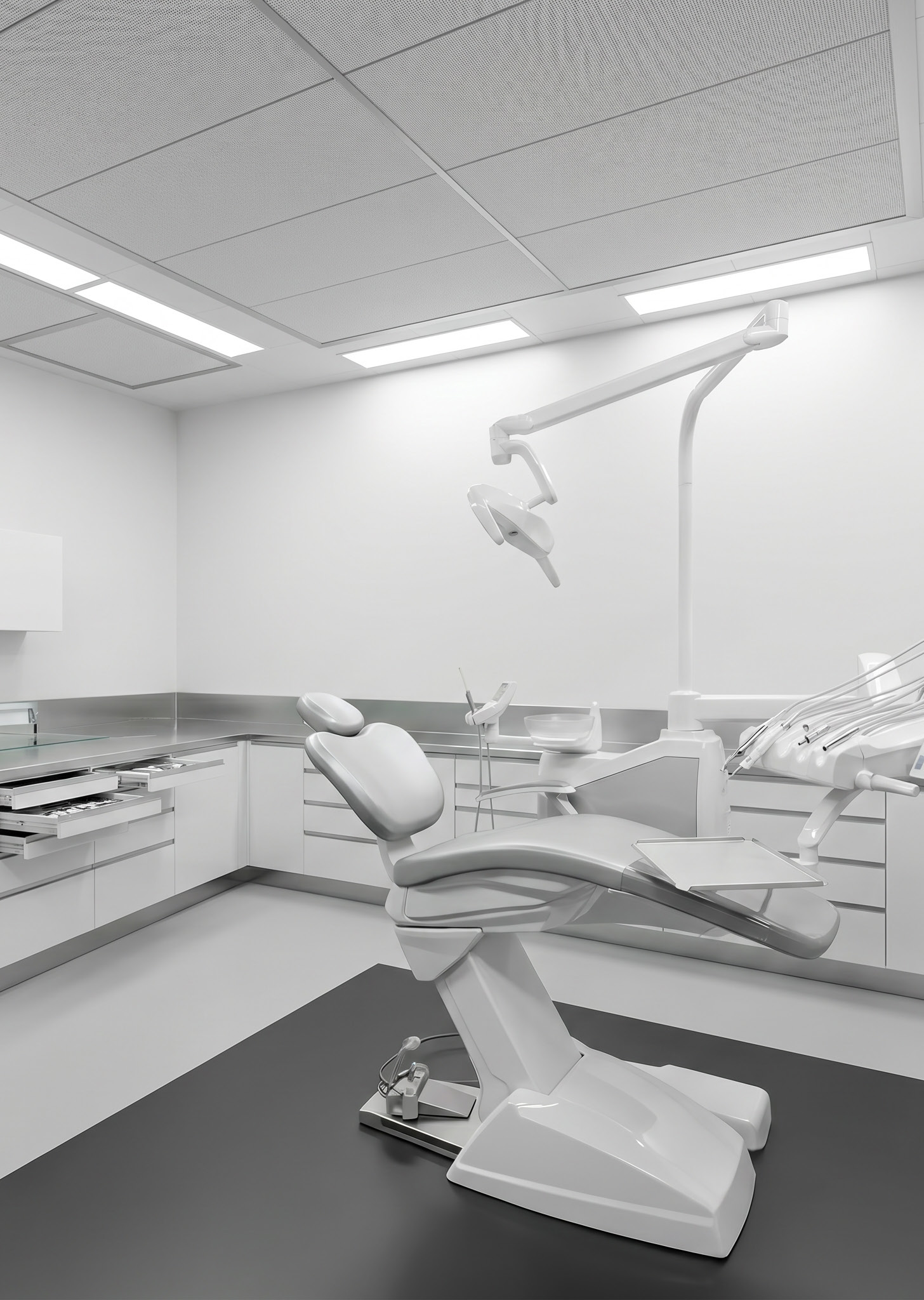
Bee-Light is a Polish manufacturer of professional luminaires and lighting systems for architecture, industry, medical facilities and rooms with elevated hygiene and technological requirements.
We design luminaires using an engineering team with many years of experience in technical solutions. We also prepare lighting designs supported by designers working on demanding technical projects.
All production takes place in Poland. Our own technological facilities provide control at every stage: from the construction concept, component selection and assembly through quality control and preparation for delivery.
The primary purpose of ROSE luminaires is to support the cleanliness of the environment. The luminaire must not introduce contaminants into the room and, in selected configurations, can additionally support the strategy of maintaining space hygiene and reducing microbiological risks.
Luminaire engineers experienced in technical solutions; lighting designers supporting parameter selection and calculations; production in Poland and process control; regional technical advisors working with investors, architects and installation designers.
A clean room is an environment with a rigorously controlled level of contaminants such as microscopic dust, aerosols and microorganisms (bacteria, fungi, mould). ROSE luminaires are designed for rooms classified according to PN-EN ISO 14644-1, from ISO Class 3 to ISO Class 9.
In specialist spaces, certificates and standards build confidence in the process, product and manufacturer. They help designers, investors and end users assess whether a solution can be used in environments with elevated hygiene, medical or technological requirements.
Quality management system used in the design and manufacture of medical devices. It confirms that processes are carried out in a controlled, repeatable manner and in accordance with medical-industry requirements.
Selected ROSE luminaires, available in dedicated configurations, have documented Class I medical device status and are entered in the international EUDAMED medical-device database. This means they have been designed and assessed taking medical-application requirements into account.
The standard defining air-cleanliness classification in clean rooms. ROSE luminaires are intended for rooms classified from ISO 3 to ISO 9.
Confirms that the luminaire has been assessed in terms of its impact on human health and can be used according to the intended purpose and scope stated in the certificate. It does not contain substances harmful to people or the environment, and the light is safe for persons present in the room. Support for environments where contamination-risk control matters.
A solution for facilities where limiting contamination risk and maintaining a high level of hygiene are particularly important, especially for pharmaceutical and food production.
Construction developed with Good Manufacturing Practice principles in mind. Appropriate for pharmaceutical, biotechnology and other controlled production processes.
Compliance with electromagnetic-compatibility requirements. Supports stable luminaire operation without interfering with other devices and technical installations.
Quality management system confirming process control, repeatability and continuous pursuit of high product quality.
Environmental management system confirming that the manufacturer controls the environmental impact of its operations and takes action to reduce it.
A list of standards and certificates becomes meaningful only when it translates into solutions to real project problems. The matrix below shows how Bee-Light responds to the requirements of individual industries and investment types.
Bee-Light's answer to these requirements is the ROSE family: a luminaire platform for rooms with high cleanliness requirements, configurable through mounting method, optics, LED sources, coating and control system.
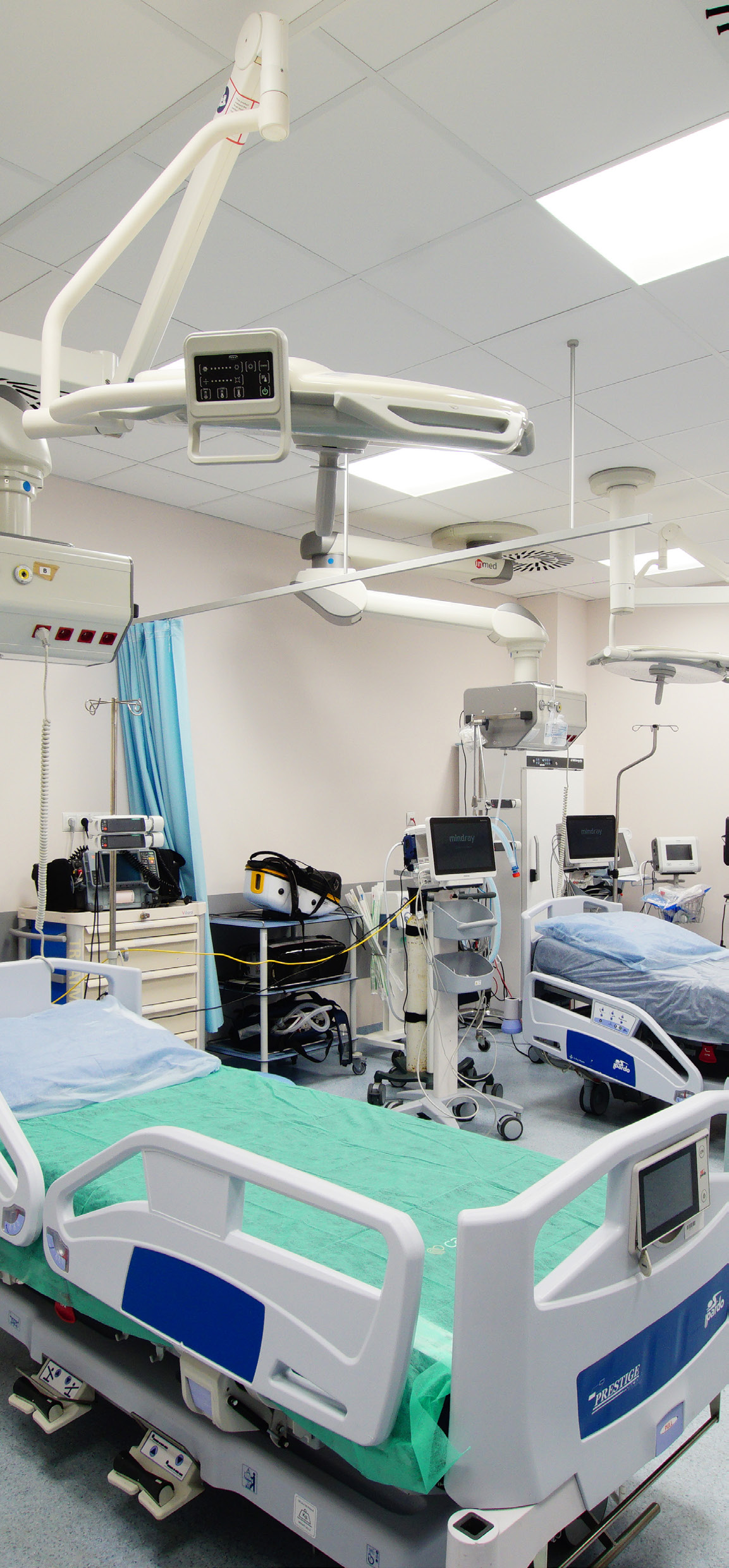
ROSE luminaires can be equipped with different types of LED sources selected for the function of the room and the project requirements. PRO is a type of high-efficiency LED source, not a separate luminaire family.
| Configuration | Application |
|---|---|
| CRI 80 / 90 / 95 / 98 | Selection of colour-rendering quality to match the room function, from general spaces to medical and laboratory applications. |
| R9 / R13 / TM-30 | More precise assessment of the colours of skin, tissue, blood and materials. Example parameters CRI 98, Rf 97 and Rg 101 indicate very high spectral quality. |
| Tunable White | Circadian scenes and user comfort, especially in patient rooms, recovery areas and 24-hour workplaces. |
| LED PRO | High luminous efficacy and optimisation of operating costs. |
| RGBW / hybrid configurations | Functional scenes, combining white light with specialist colour and process-specific configurations. |
| Specialist LEDs | Coloured light can support specialist processes, medical procedures and technological operations. Green LED can support laparoscopic and endoscopic procedures and work with medical displays. Yellow LED can be used in processes involving photosensitive materials, including pharmaceuticals and electronics. Red LED can support selected laboratory and observation applications. Blue LED can be used in selected quality-control processes and industrial applications. |
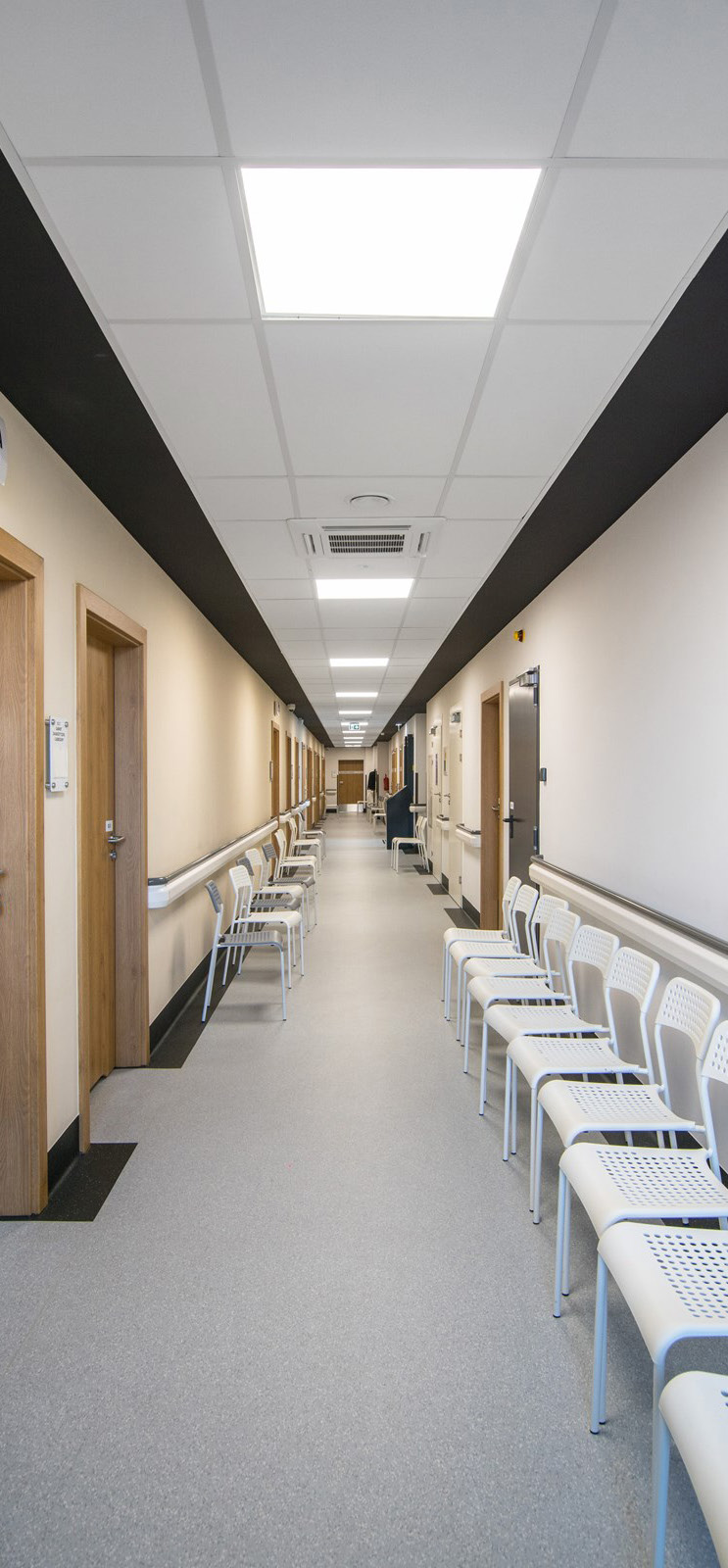
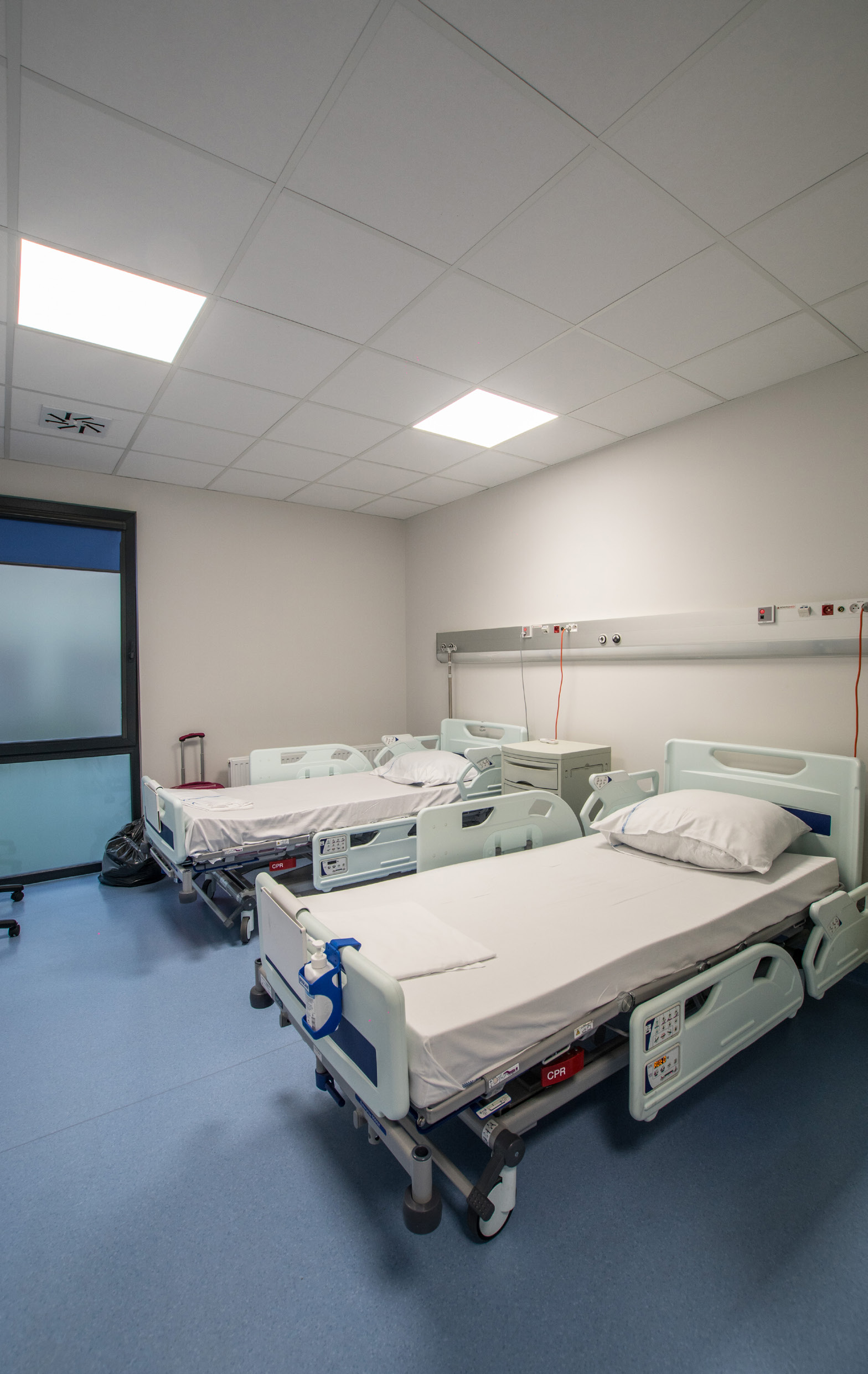
In rooms with elevated cleanliness requirements, the luminaire surface directly affects the safety of users, patients and the processes being carried out. This applies not only to medicine, but also to laboratories, pharmaceuticals, electronics production and other environments where cleanliness is critical and room-cleaning processes are costly and time-consuming.
In dedicated ROSE configurations for medical, laboratory, pharmaceutical, electronics and clean-room applications, Bee-Light can use a specialist MED paint coating containing active silver ions. Silver ions can interfere with cellular structures, block the activity of selected enzymes and limit the ability of microorganisms to reproduce.
The MED coating supports limiting the growth of bacteria and fungi on the external surface of the luminaire. It does not replace the cleaning, disinfection and control procedures applicable in the facility, but is an additional element of hygienic luminaire construction.
In practice, the luminaire not only limits risks associated with introducing contaminants into the room; in selected configurations it can also support the strategy for maintaining space hygiene. This is particularly important where environmental cleanliness is critical and cleaning or room downtime generates high costs.
The selection of optics determines working comfort, surface hygiene and safe use. The diffuser in a clean-room luminaire protects the optical system, affects light distribution, reduces glare, facilitates cleaning and can increase process safety.
| Variant | Characteristics | Application |
|---|---|---|
| SHM | Frosted tempered glass. Combines protection of the optical system with light diffusion and softer perceived luminance. | Medical, laboratory, clean-room and hygienic zones where soft, diffuse light and optical-system protection are important. |
| MPRM SH | Microprism with tempered glass. | Clean rooms, medical facilities, laboratories and work zones requiring glare reduction and optical-system protection. |
| MPRM + PLX SH | Optical system combining a microprism, opal PLX diffuser and tempered glass. | Operating theatres and specialist rooms requiring a combination of visual comfort, light diffusion and glass protection. |
| PLX SHR | Opal PLX diffuser with anti-reflective glass. | Rooms requiring soft light and reduced directional reflections. |
| MPRM SHR | Microprism with anti-reflective glass. | Rooms with equipment, displays, laser light or risk of directional reflections. |
| SAFE SH | Safety glass arrangement: tempered glass + laminate + tempered glass. A solution that reduces the risk of mechanical contamination if the glass is damaged. | Higher-risk zones, hygienic environments, food, technology and facilities requiring increased diffuser safety. |
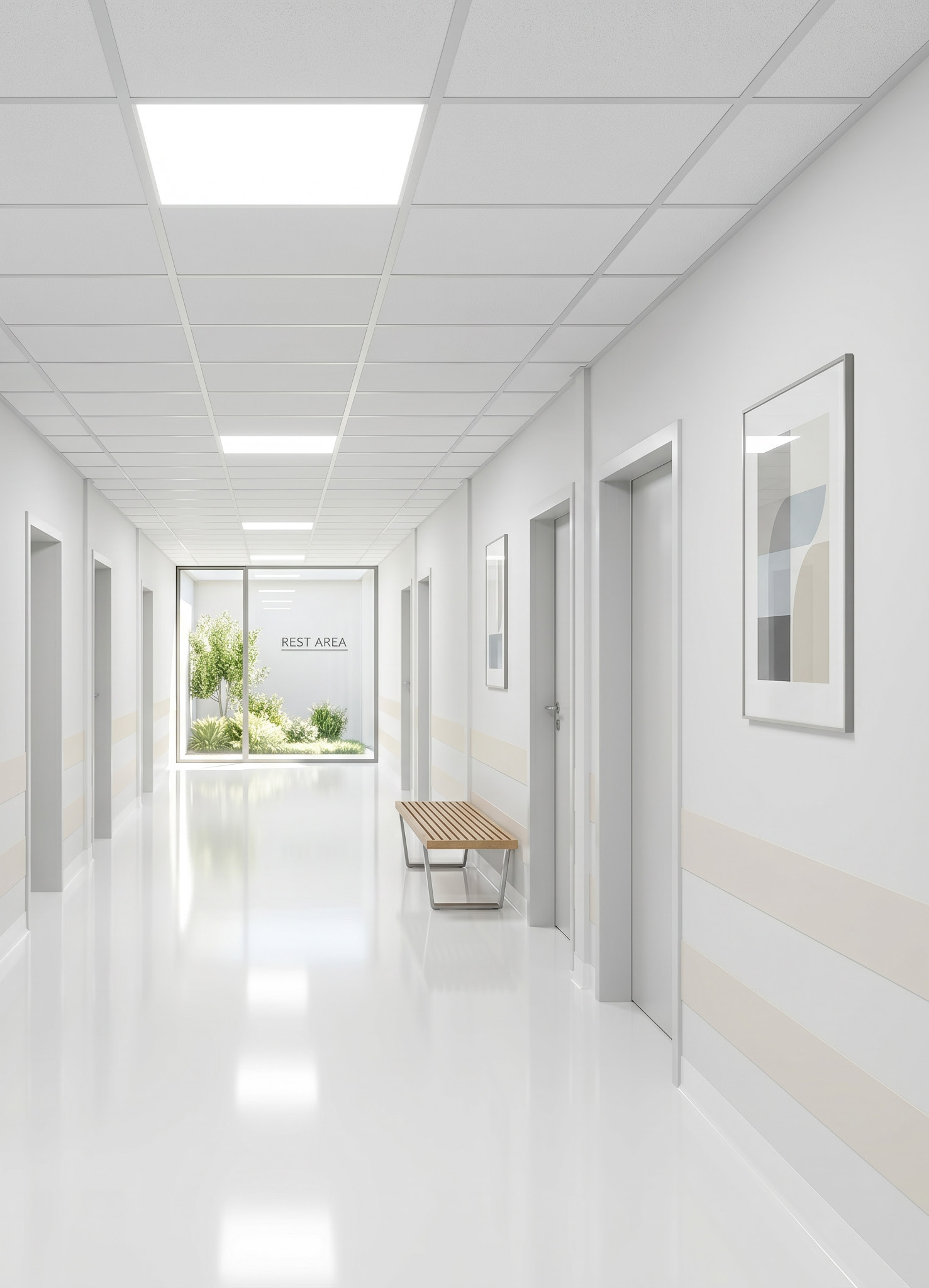
Modern clean-room and medical lighting increasingly requires scene control, dimming, operating schedules and energy-use optimisation. ROSE luminaires can be equipped with control solutions such as DALI, Casambi or Bee-Main (BM), and then integrated with the building's higher-level BMS if required by the project.
BMS is neither a power supply nor a luminaire dimming standard. It is the supervisory system managing various building installations. Integration with BMS therefore takes place through an appropriately selected control system, installation design and device configuration.
BEE-MAIN is a modern intelligent lighting-control system based on Bluetooth® Mesh technology. It enables automatic luminaire management, creation of lighting scenes, cooperation with motion and light sensors and remote configuration via an app. The solution provides greater user comfort, flexibility and real energy savings.
Drivers compatible with the selected control protocol enable advanced lighting management, smooth dimming and the creation of lighting scenes matched to the function of the room.
Standard Bee-Light ROSE luminaires are designed as non-openable constructions. This is the basic starting point for clean-room and medical environments where sealing, limiting intervention in the luminaire and hygienic safety are particularly important.
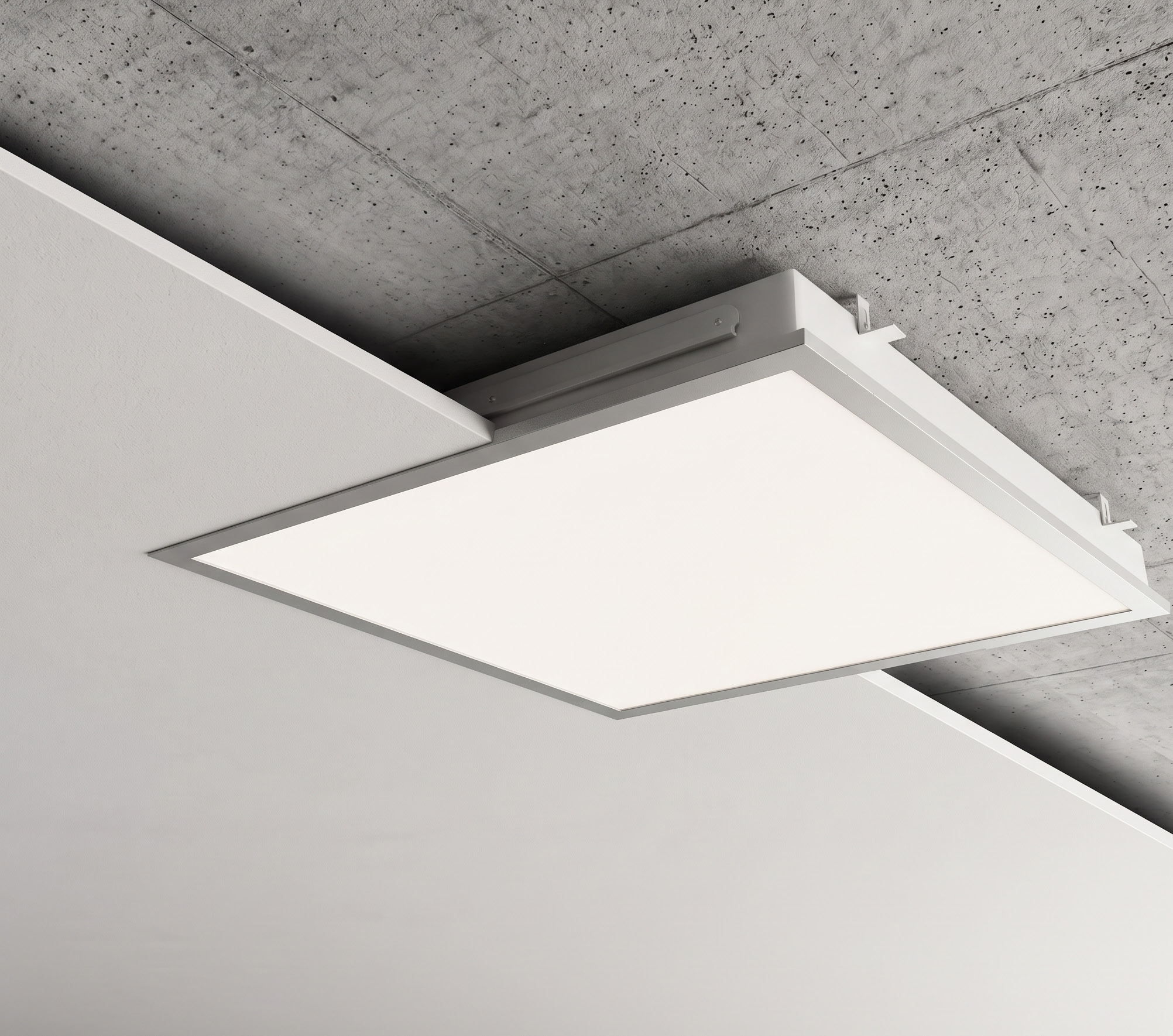
The non-openable construction reduces the probability of environmental contamination and limits the risk of intervention in the sealed optical chamber. In practice, the luminaire can operate as a stable, hermetic element of the ceiling without the need to regularly open the optical chamber from the room side.
To facilitate technical maintenance, the driver can be installed outside the sealed optical chamber. This allows service work on electrical equipment without disturbing the closed optical section.
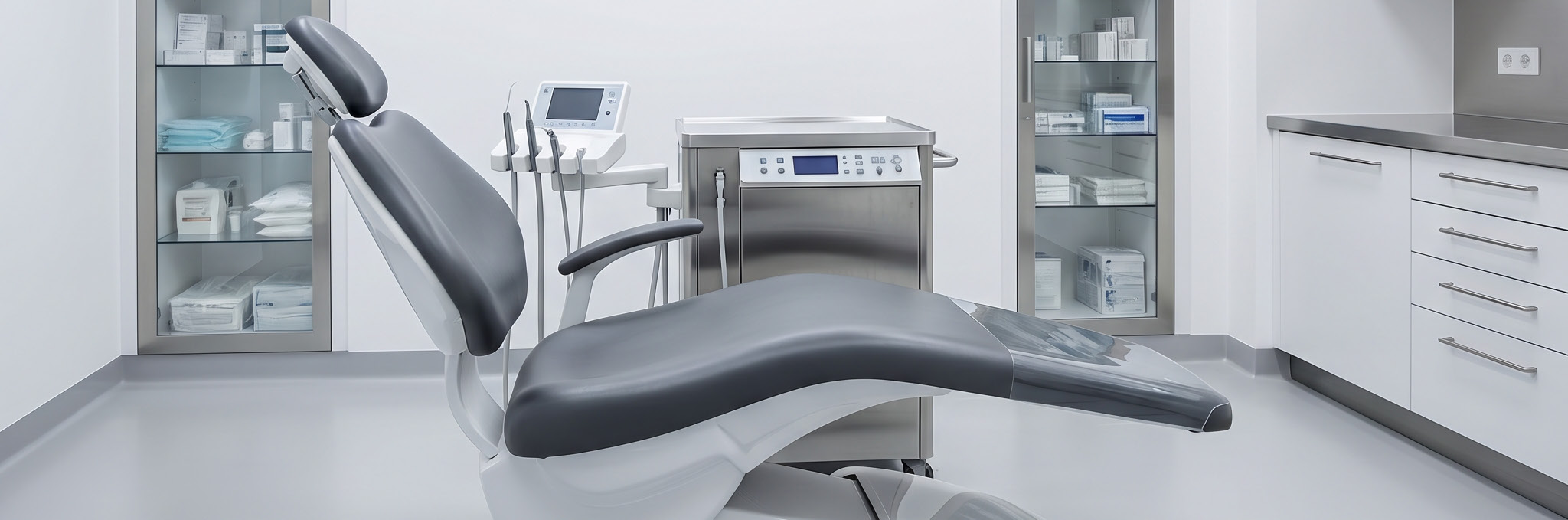
ROSE luminaires have a high IP65 protection rating, which is the standard protection level in the platform's configuration key for clean-room solutions.
This means dust-tight protection and resistance to water jets, particularly important during cleaning and disinfection procedures. The devices are designed for stable operation under standard medical and laboratory environmental conditions: ambient temperature from +5°C to +30°C, relative humidity from 40% to 60%, and pressure from 960 to 1100 hPa.
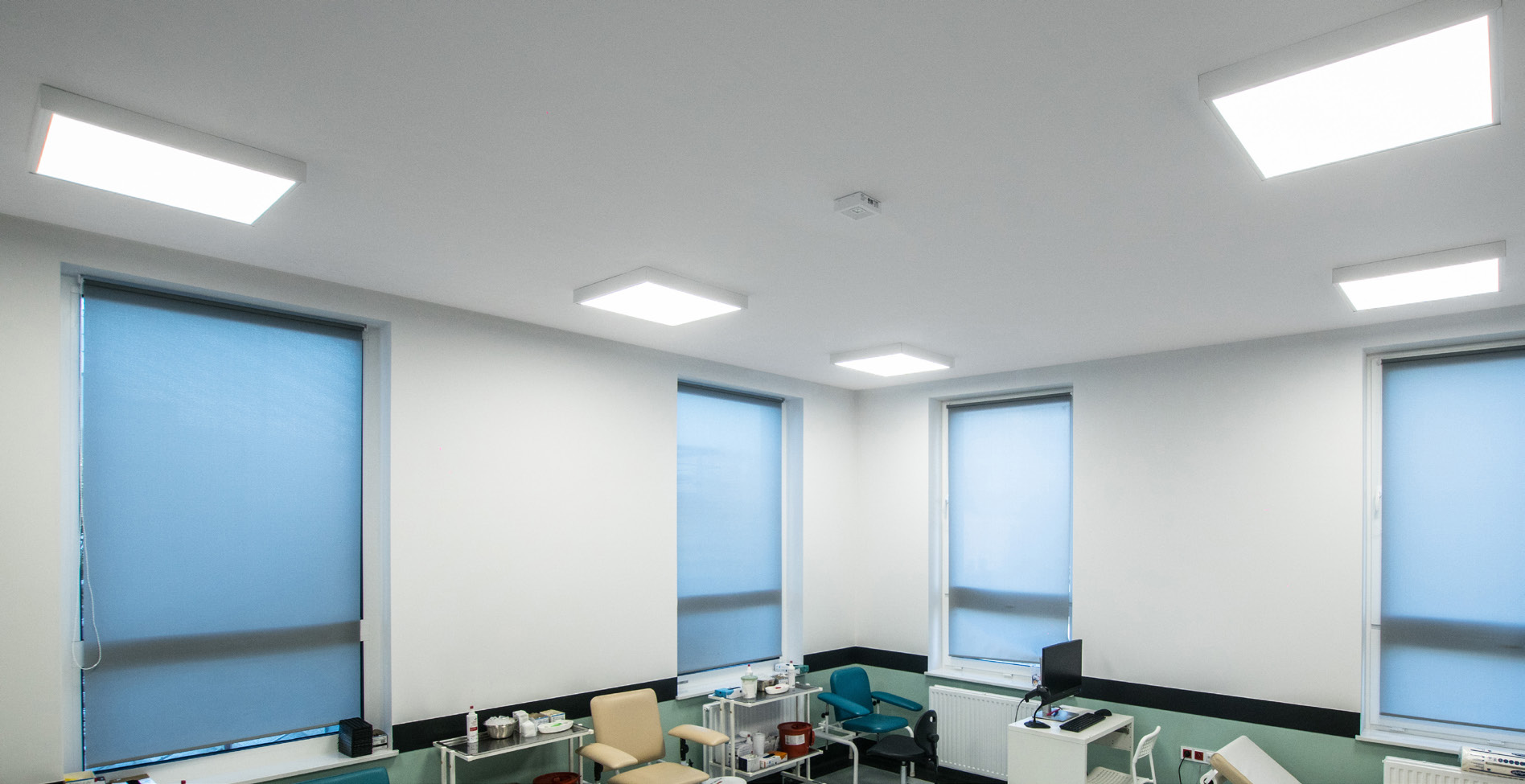
The mounting method defines the physical integration of the luminaire with the ceiling or building structure. Flush alignment with the ceiling plane is treated as the proper design direction for ROSE luminaires in clean rooms and in facilities designed in accordance with good manufacturing practices.
| Mounting variant | Description & application |
|---|---|
| Clip-in | Sealed clip-in ceilings. The luminaire slides into the ceiling lock and sits flush with the ceiling plane. |
| SP / Sandwich Panel | Installation in thick sandwich-panel ceilings using special brackets. TRIMLESS – flush with the ceiling, luminaire access from above. NF – glass with a magnetic frame, access from the diffuser side. |
| GK | Installation in plasterboard ceilings using a dedicated adaptation frame. |
| P / modular ceiling | Installation in a modular ceiling based on T15 / T24 construction, commonly called Armstrong type. Luminaires can be adapted to other modular suspended-ceiling structures. |
| N-ML / surface mounted | Tool-free surface mounting, without visible mounting elements, using magnets and dedicated brackets. |
| FTT | The luminaire is inserted from the room side, while fixing and service access are carried out from the technical-floor side. Requires a technical ceiling or service space above the room. |
Open the 3D model of each ROSE construction variant directly from the product card.
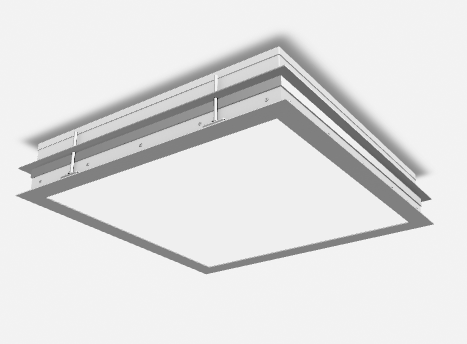
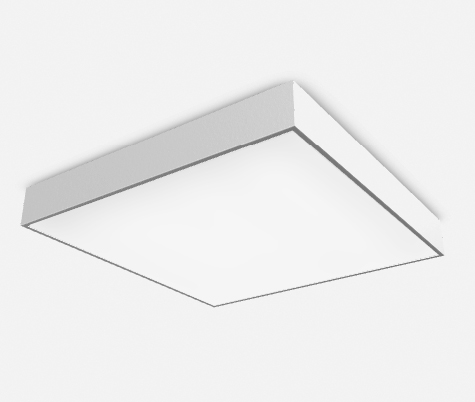
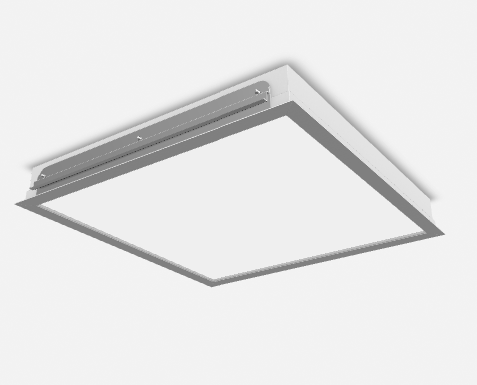
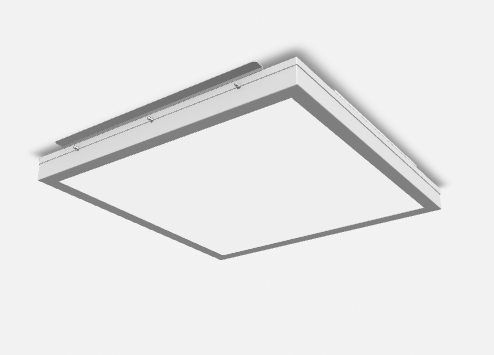
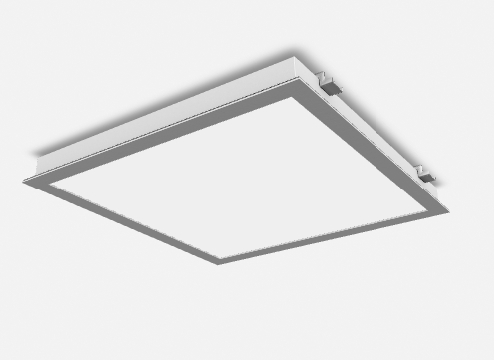
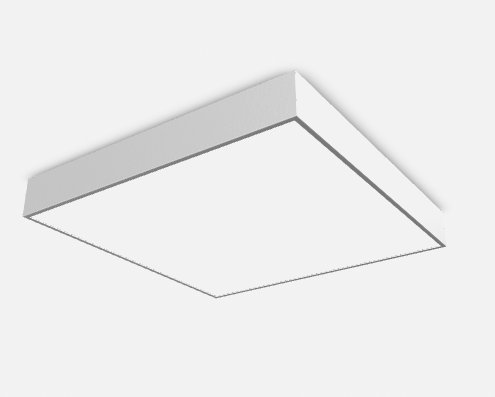
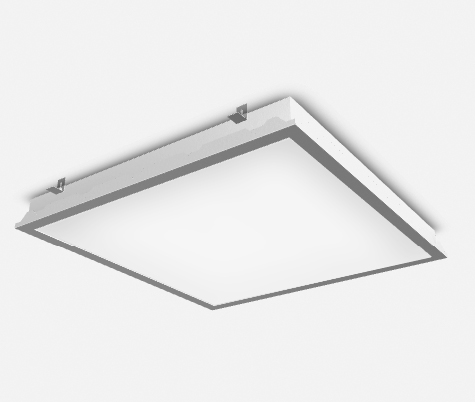
ROSE luminaires can be configured for many facility types where cleanliness, hygiene, parameter stability and process predictability are critical.
Each segment has its own priorities: from hygiene and colour quality in medical spaces, through cleanability and repeatability in pharma, to risk limitation in food production or precise spectrum matching in electronics.
This structure helps match the luminaire configuration to the operating priorities of each type of facility.
Hygiene, light quality, staff and patient comfort.
Medical configurations, high CRI, MED coating, RGBW or monochromatic LED, scene control.
Cleanliness, repeatability, service and compliance with procedures.
ROSE for ISO 3 to ISO 9, flush ceiling integration, non-openable construction, FTT.
Product safety, easy cleaning, reduced glass risk.
SAFE SH, hygienic construction and configurations supporting HACCP+ requirements.
Precision, stability, dust control and working comfort.
CRI 90 to 98, MPRM, control, specialist configurations, MED coating with silver ions.
Parameter stability, dust control, spectral matching.
Flush ceiling integration, EMC, specialist LEDs, process-specific configurations.
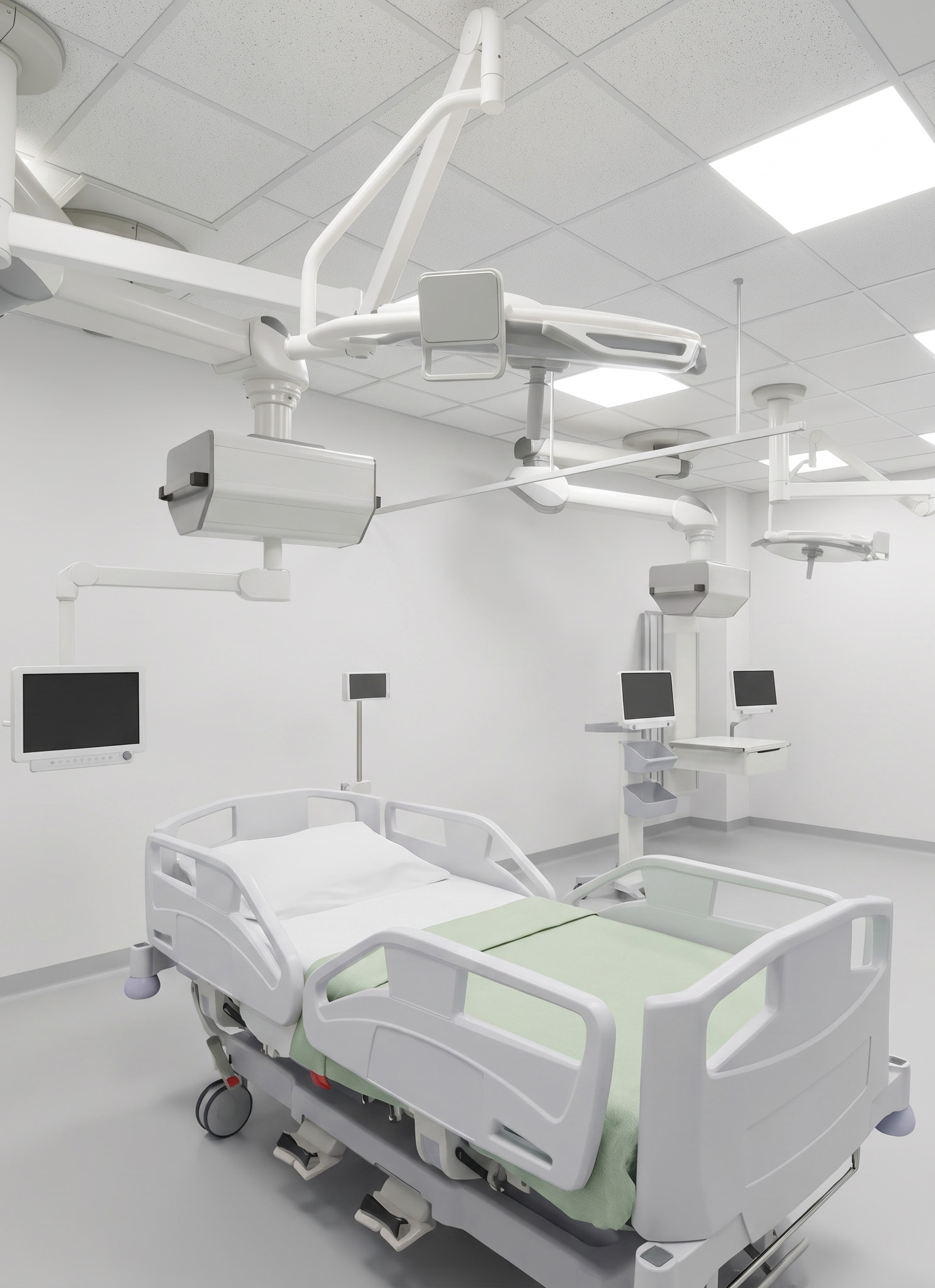
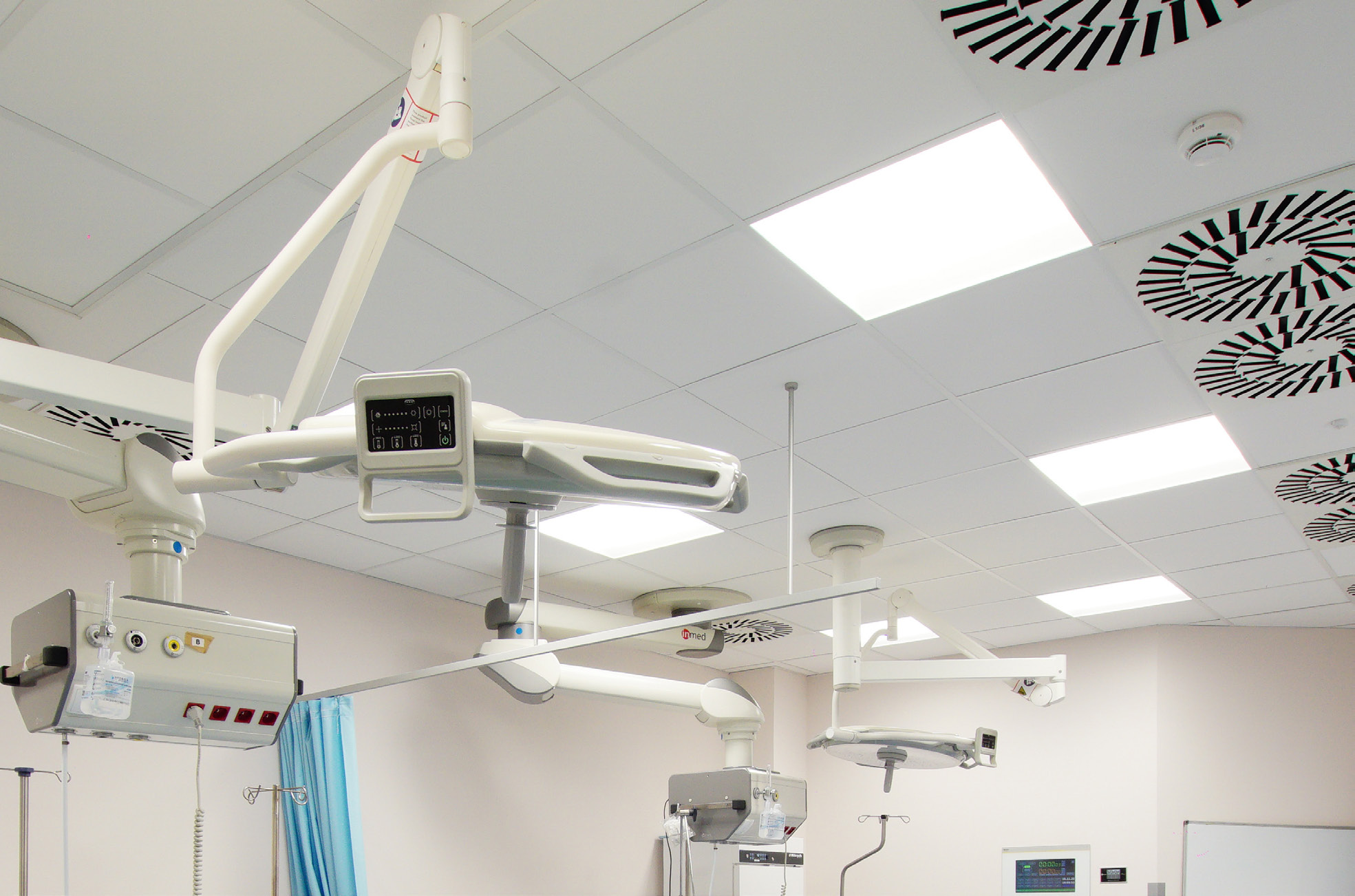
Challenge: in an operating theatre, general lighting must work together with the main surgical lighting, monitors, medical equipment and the team's organisation of work. High hygiene, easy disinfection, glare limitation, light stability and very good colour rendering are critical.
Bee-Light solution: ROSE luminaires were selected in a medical configuration matched to the ceiling system and facility requirements. High-CRI LED sources, glare-limiting diffusers and a construction supporting surface hygiene were used. Depending on requirements, the design may include additional green light for laparoscopic, endoscopic and other procedures using probes and medical imaging monitors, with control between general and specialist lighting during procedures.
Effect: general lighting supports staff comfort, improves spatial readability and helps maintain high standards in the operating environment.
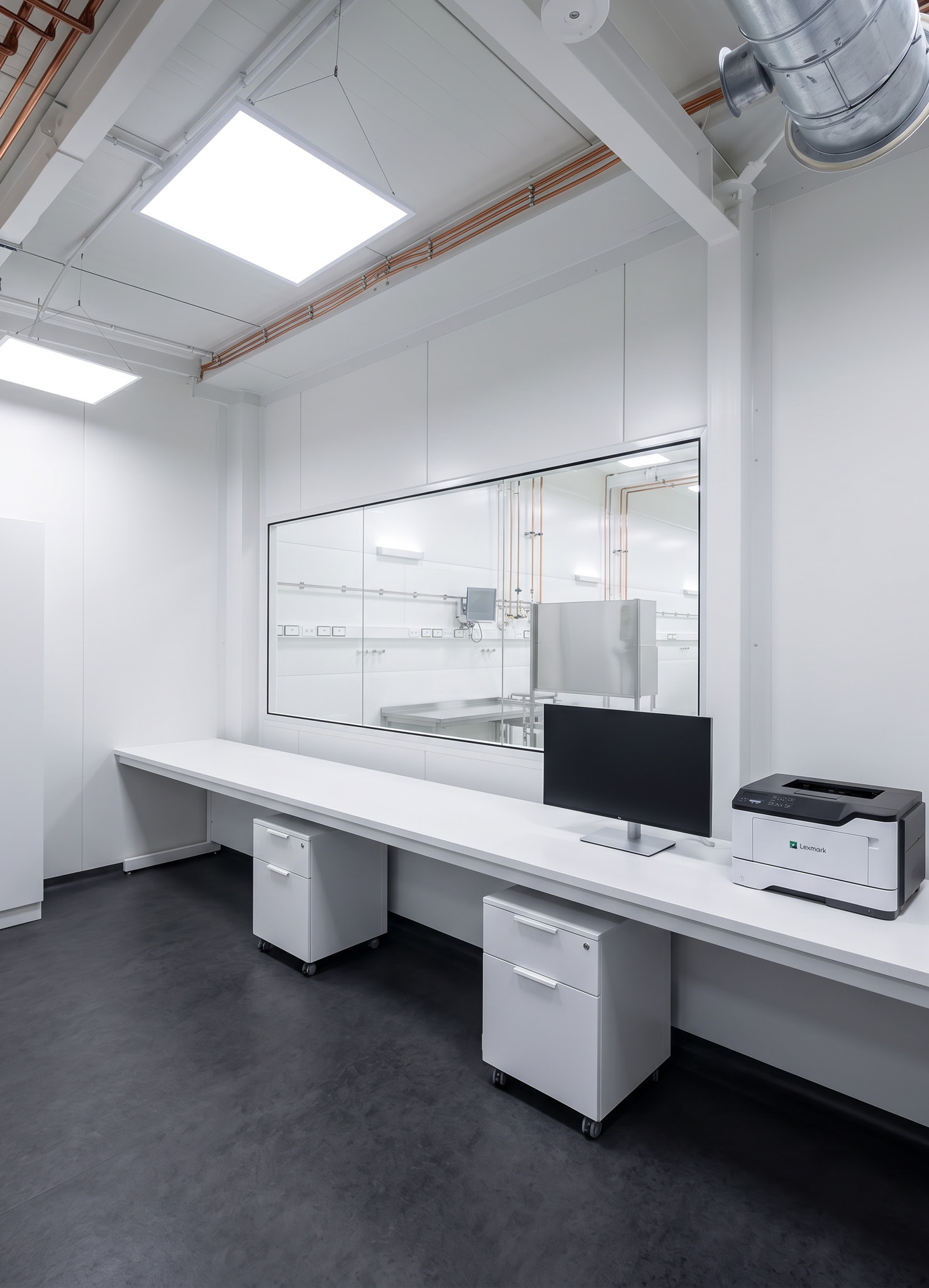
Challenge: the pharmaceutical plant required luminaires integrated with the technical ceiling, allowing intervention in the clean zone to be limited and providing light adapted to processes involving photosensitive materials.
Bee-Light solution: ROSE luminaires in the FTT variant were used, with service access from the technical floor. The configuration included an additional Yellow LED source with a precisely defined wavelength, intended for production processes involving materials sensitive to selected spectral ranges.
Effect: the solution enables service work without intervention in the clean zone and supports production processes requiring a controlled lighting environment.
A large medical, laboratory or pharmaceutical investment is not limited to clean rooms. It also includes corridors, waiting areas, consulting rooms, offices, conference rooms, technical zones, warehouses and outdoor lighting.
ROSE opens the discussion about demanding controlled environments, while the complete Bee-Light portfolio makes it possible to build coherent lighting across the entire facility.
Bee-Light can support the investor as one manufacturer for many zones of the facility. This means design consistency, easier coordination, greater control over delivery schedules and the ability to match aesthetics and parameters to different building functions.
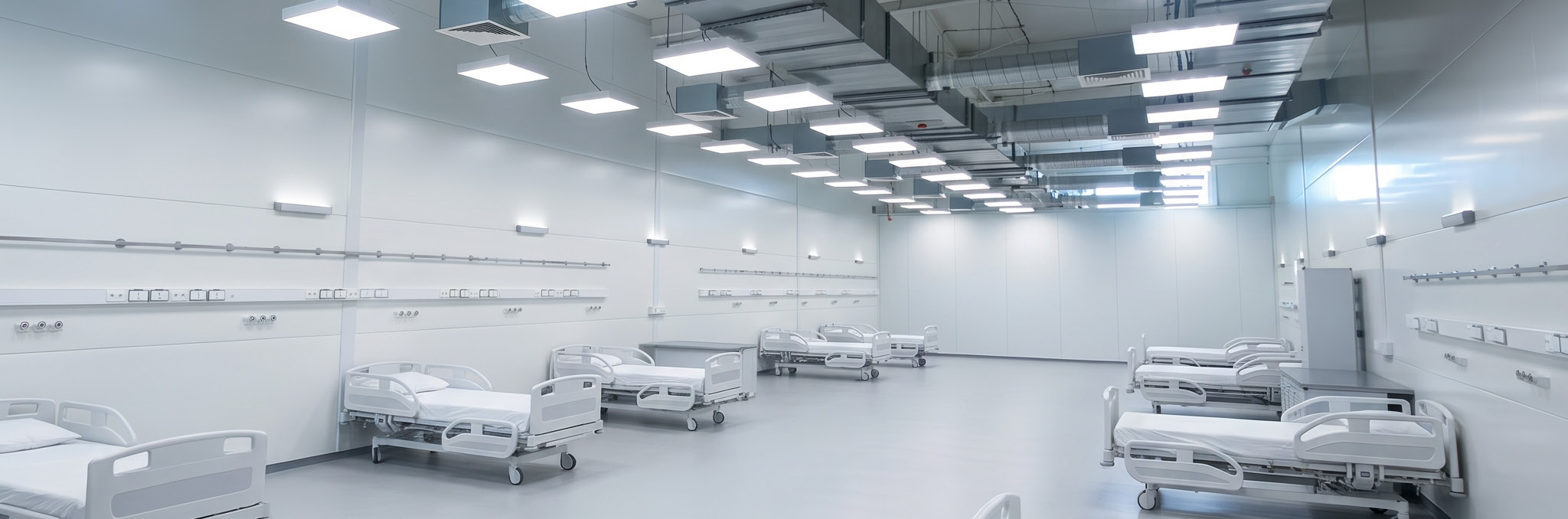
ROSE is one luminaire family for clean-room and medical environments that can be adapted to the requirements of a specific facility. The luminaire configuration results from the room function, cleanliness class, ceiling system, service method, expected light quality and hygiene requirements.
| Configuration area | Available selection directions | Project relevance |
|---|---|---|
| Mounting | Clip-in, SP Sandwich Panel, GK, P modular ceiling, N-ML surface mounted, FTT | Matching the ceiling architecture |
| Service | Non-openable construction, FTT from the technical floor, NF from below through glass | Access control and reduced intervention in the clean zone |
| Optics | SHM, MPRM SH, MPRM+PLX SH, PLX SHR, MPRM SHR, SAFE SH | Visual comfort, protection and hygiene |
| LED sources | Standard, PRO, CRI 80 / 90 / 95 / 98 | Efficiency and colour-rendering quality |
| Colour temperature | 3000 K, 4000 K, 5000 K, Tunable White | Matching the function of the room |
| Specialist light | Coloured LEDs, UV / 405 nm subject to confirmation, RGBW | Configurations for procedures and processes |
| Coatings | Standard, MED with silver ions | Support for space hygiene |
| Control | DALI, 1-10 V, Casambi, Bee-Main (BM), integration with the building management system through the appropriate facility control system | Dimming, lighting scenes, refurbishment, automation and energy optimisation |
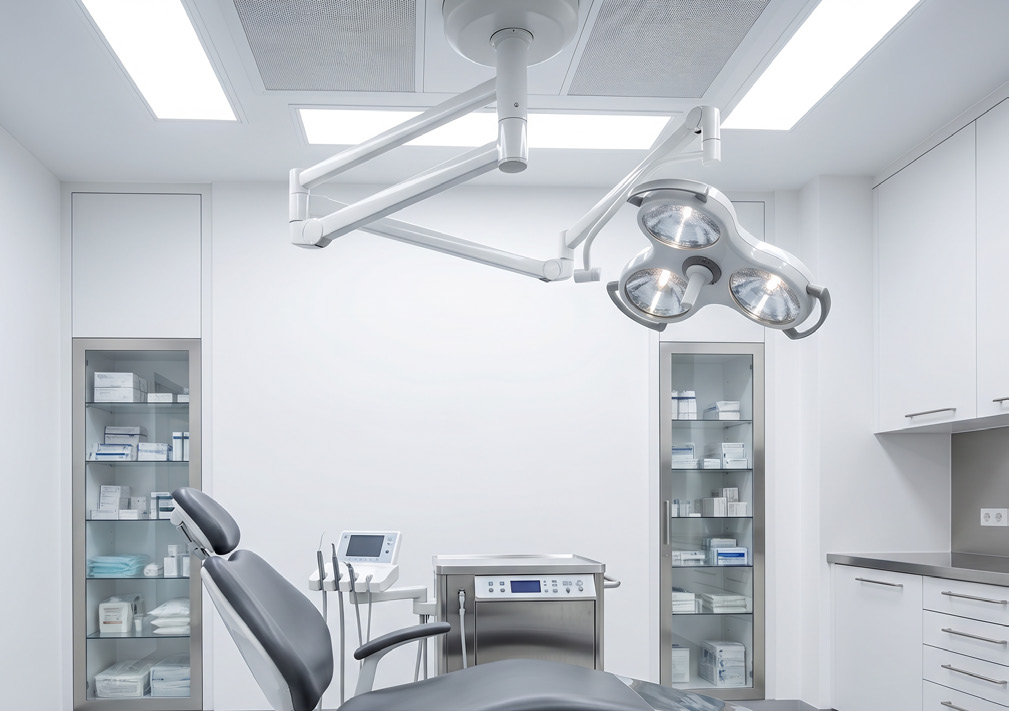
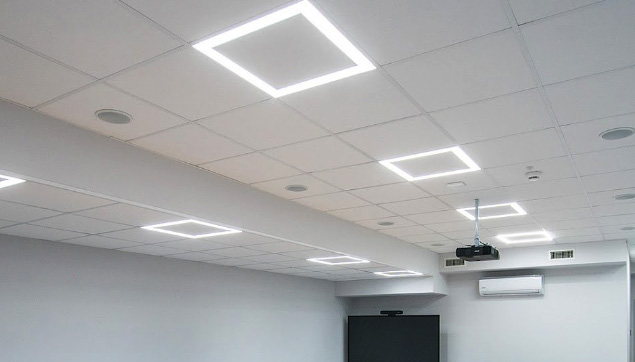
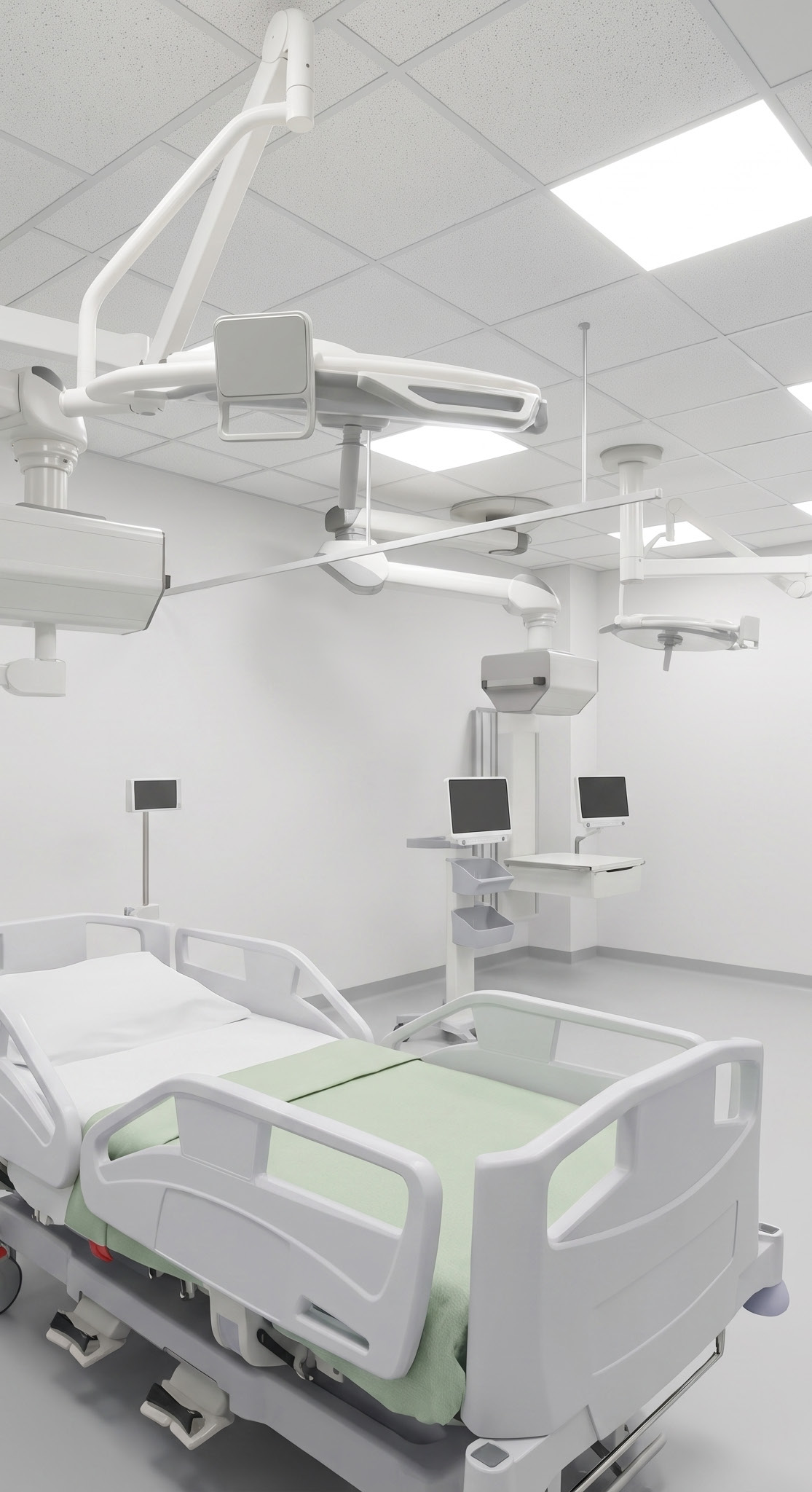
Bee-Light lighting systems operate in demanding medical, laboratory, industrial and commercial facilities across Europe. The examples below demonstrate experience in projects of different scales and functions.
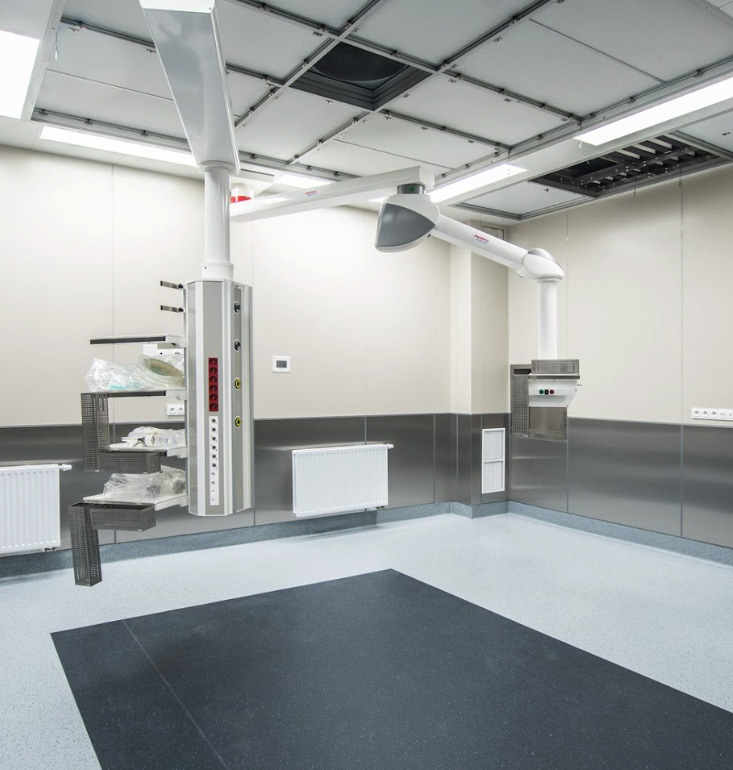
Every controlled environment has its own requirements. Therefore, luminaire selection should be preceded by an analysis of the room function, cleanliness class, ceiling system, service requirements, cleaning procedures and expected lighting parameters.
Bee-Light supports investors not only in luminaire selection, but also in assessing the efficiency of refurbishment. We offer free energy-efficiency analyses of modernised lighting systems, analysis of existing infrastructure and precise return-on-investment calculations for proposed solutions.
Investors, architects and electrical-installation designers can rely on the Bee-Light team: regional technical advisors, lighting designers, luminaire engineers and our production facilities in Poland. We can support the project from concept, parameter selection and calculations through production and delivery of the finished solution. We are also ready for new challenges: together with our specialist engineers, we can adapt luminaires to non-standard requirements.